Team companies. Library hubs. Real clients, real governance, real consequences. An action-learning academy at The Evergreen State College, Olympia WA — in partnership with Tiimiakatemia, Finland — where your projects are your proof.
One academy, one narrative — six ways in. Pick your door and watch the model bend toward you without breaking its shape.
High school & early college. Bank real university credit through project work — not lecture halls.
Earn Evergreen credit through Business Fundamentals: Team Entrepreneurship, Leadership & Innovation.
You already train, compete, and win as a team. Discover what’s beyond being an athlete.
Turn lived experience into civic and economic projects. Dignity and momentum — not charity.
Life skills, planning skills, entrepreneurial skills — become the interface between human needs and the prompt.
Autistic, ADHD, AuDHD, otherwise-wired. Explicit structure and honest systems — built in, not bolted on.
No semesters of waiting. A living weekly cadence that compounds — sprint after sprint, 6–8 times a year, in public.
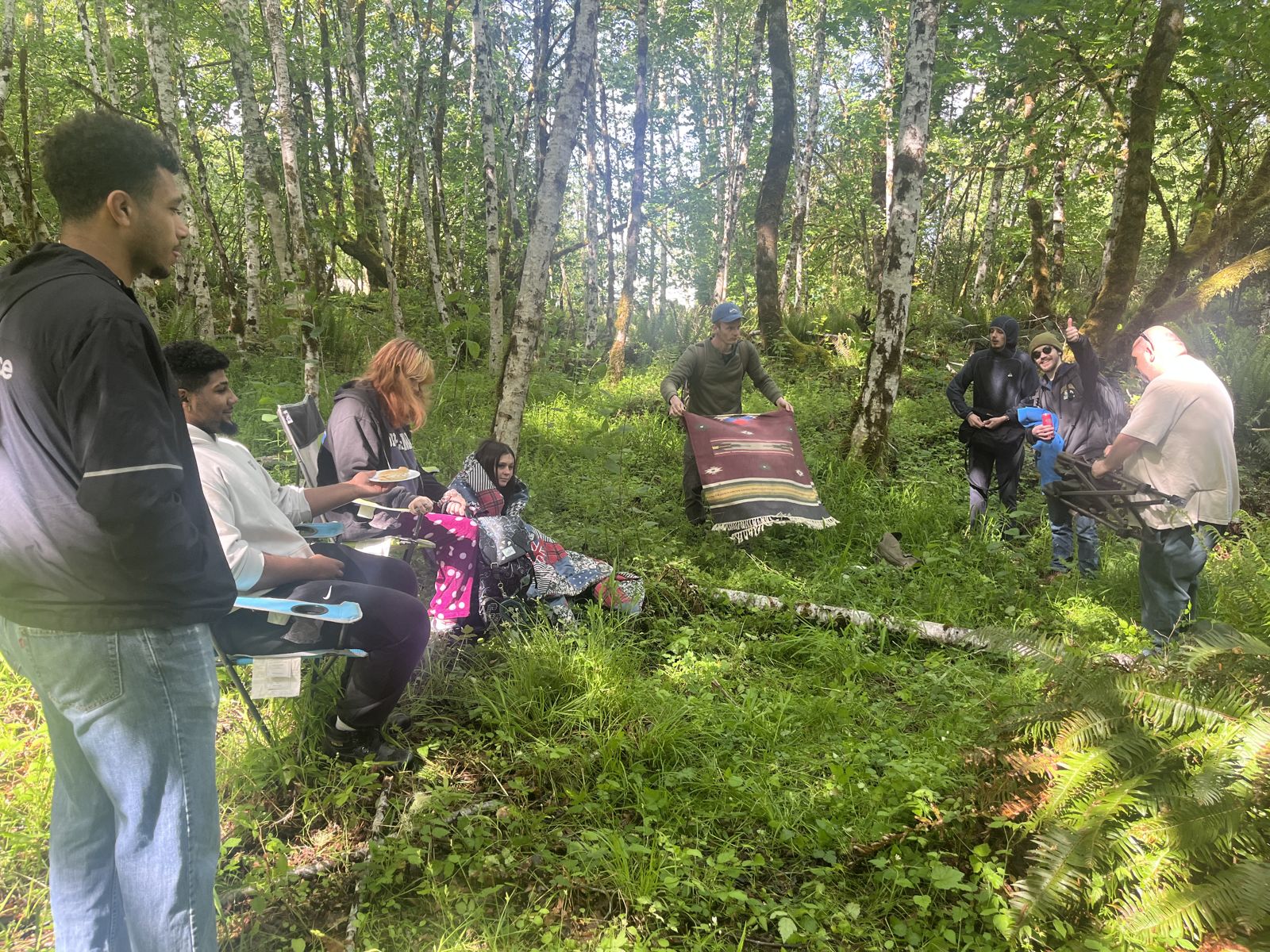
Twice a week: dialogue, deep listening, blockers, commitments. The circle of chairs where the real work surfaces.
6–8 week cycles of paid and pro-bono client work. Pre-Motorola in, Post-Motorola out — every sprint leaves evidence.
Books over textbooks. Short essays that sharpen practice, from Senge to Scharmer — theory earned through use.
Finance, sales, delivery, community, learning steward. Everyone leads something real before they graduate.
Every role tracks against 21 skills across three pillars — evidenced through artifacts, transparent rubrics, and micro-badges that aggregate toward certificates and articulated degree credit.
The “university of the future” claim isn’t a slogan. It rests on a body of peer-reviewed research in active development, grounded in eight years of documented practice.
Maps the CML/Tiimiakatemia model onto Michael Marquardt’s six-component action learning framework — showing that team companies, real client problems, and reflective questioning constitute a complete, rigorous pedagogical architecture. Grounded in Senge, Kolb, and Bandura across 650 evaluations and 120+ self-reflections.
Scharmer & Pirson’s Club of Rome–linked principles describe the university that comes after the industrial-era lecture hall: a living innovation ecosystem, nature as teacher, real-world challenges as curriculum. This paper documents the Changemaker Lab enacting all twelve — in a public library on Tuesday afternoons, and an old-growth forest when the questions need more space.
Scharmer’s presencing framework asks everyone to cultivate open, unfiltered attention. This paper explores its resonance with autistic phenomenology — the idea that some minds have privileged access to precisely the quality of knowing Theory U calls for. Different minds building things differently, on purpose.
MIT’s u.lab (Leading from the Emerging Future) isn’t an elective bolted onto the program — it’s fully and seamlessly integrated into the team cadence, every year. Changemakers practice u-school presencing and systems leadership inside real projects, and can earn MITx certificates annually along the way.
“I couldn’t be happier to see the concept of fourth-person knowing applied to youth entrepreneurship… the opportunity, structure, support and mentorship to connect with a future that is looking at you and needs you to come into being.”Eva Pomeroy — Presencing Institute, responding to the Changemaker Lab’s documented practice
AI is embedded in every team company’s daily work — research, writing, analysis, design, strategy. But the skill we cultivate isn’t prompting. It’s judgment: knowing what humans need, and translating it.
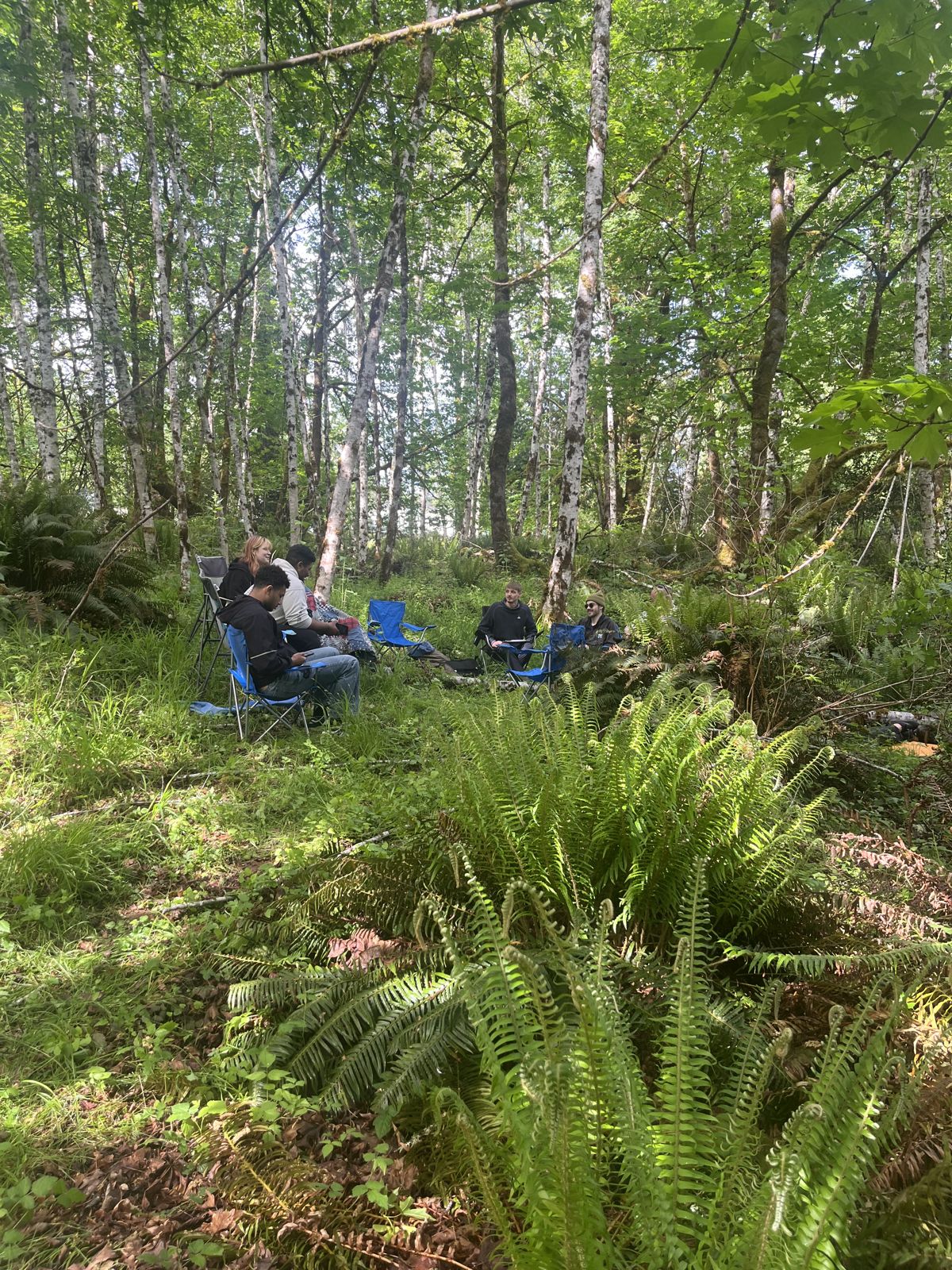
The model breathes in two registers: the structured intelligence of the lab and library, and the open attention of the forest. Scharmer calls nature the teacher. We just walk outside.
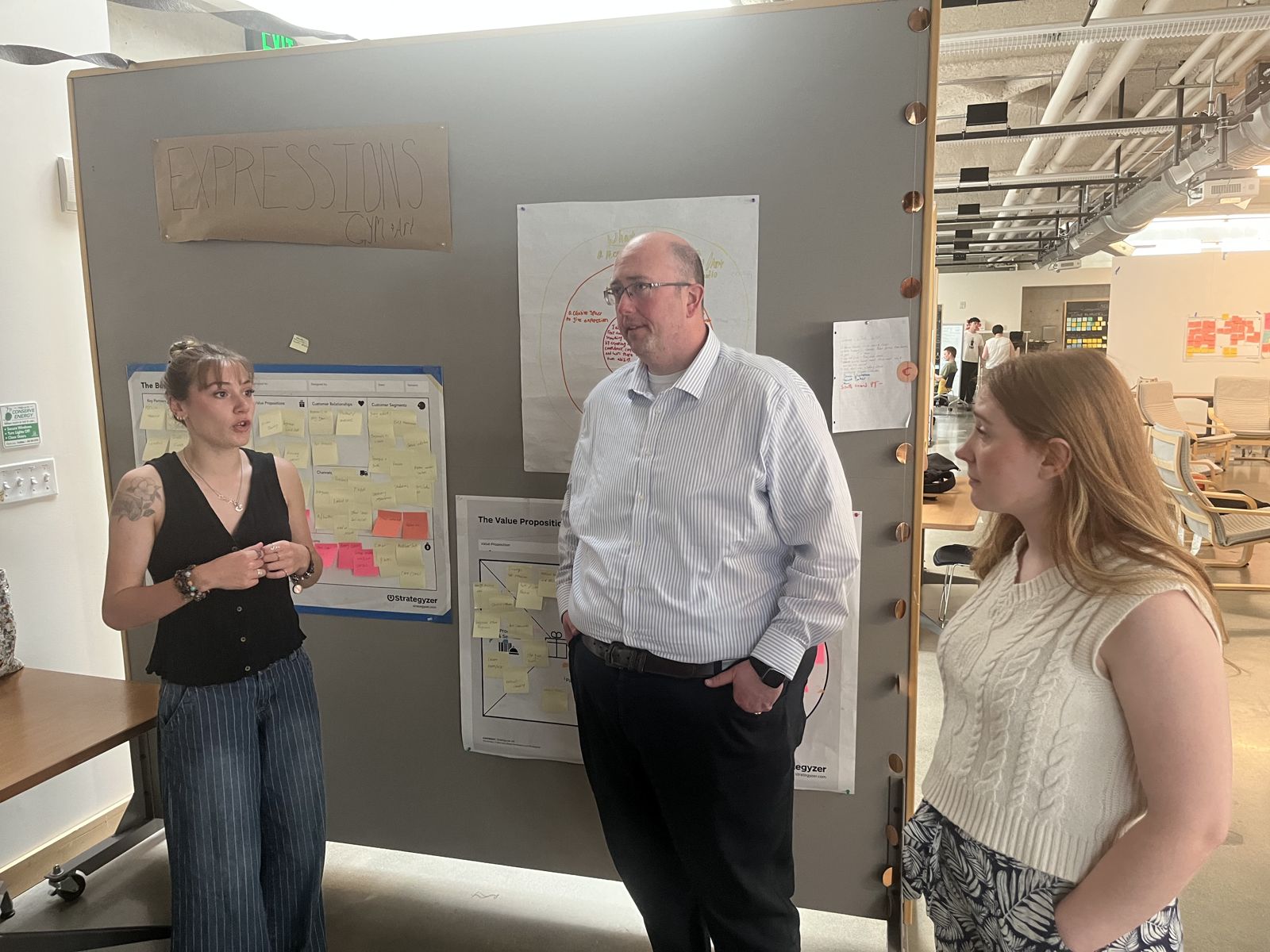
Teams anchor in public library co-working spaces — visible, inter-generational, open. Business model canvases on the wall, real board meetings while patrons move through their ordinary day.
Legislators, judges, and economic development leaders don’t visit for photo ops. They sit in the circle for hours of substantive dialogue — the “courage amplifier” that tells a young founder their vision is real, consequential, actionable.
Weekly open studio: Tuesdays 1–5 PM, Olympia hub (Timberland Regional Library).
When the questions need more space than a room can hold, sessions move to the forest. Debriefs among the ferns. Governance conversations under old growth. The connection with nature isn’t decoration — it’s named in the Club of Rome principles as a way of knowing.
This is where fourth-person knowing gets practiced: the open, unfiltered attention from which genuinely new possibilities emerge — and where some minds discover they’ve had privileged access all along.


“The community is not a case study here. It is the room.”From the Changemaker Lab’s documented practice
Drawn from anonymized changemaker self-evaluations and peer feedback documented in our published research — and filmed in the meadow where the reflection happens.
“From being told what to learn… to owning what I need to become.”Changemaker self-evaluation — on the shift to agency
“The culmination of this was possible because of the action learning I participated in — learning and utilizing the Case Clinic model, communicating in dialogue, and meditating and reflecting on the issues presented.”Changemaker self-evaluation — founder of a registered nonprofit
“You bring a great perspective and have a focus on representation that is SO valuable to our team.”360° peer evaluation — team company, spring cohort
“I combined insights from The Fifth Discipline to exercise Mental Models, Self-Mastery, and pursue Shared Vision and Systems Thinking — with storytelling techniques from Start With Why to create a compelling narrative.”Changemaker self-evaluation — applied to a live venture
“Sharper. More connected. More convinced that the change they are building is not just possible — it is needed.”Documented after four hours of dialogue with a federal judge
CML is a sovereign node in the global Tiimiakatemia Team Academy network — sites across 14+ countries including Finland, France, the Netherlands, Hungary, Spain, and the United Kingdom. Each operates as an independent unit inside its own local institution: a proven international model, not a franchise, not an import.
Our changemakers belong to the global network — with real opportunities to visit other Team Academy institutions and experience changemaking in another country and culture.
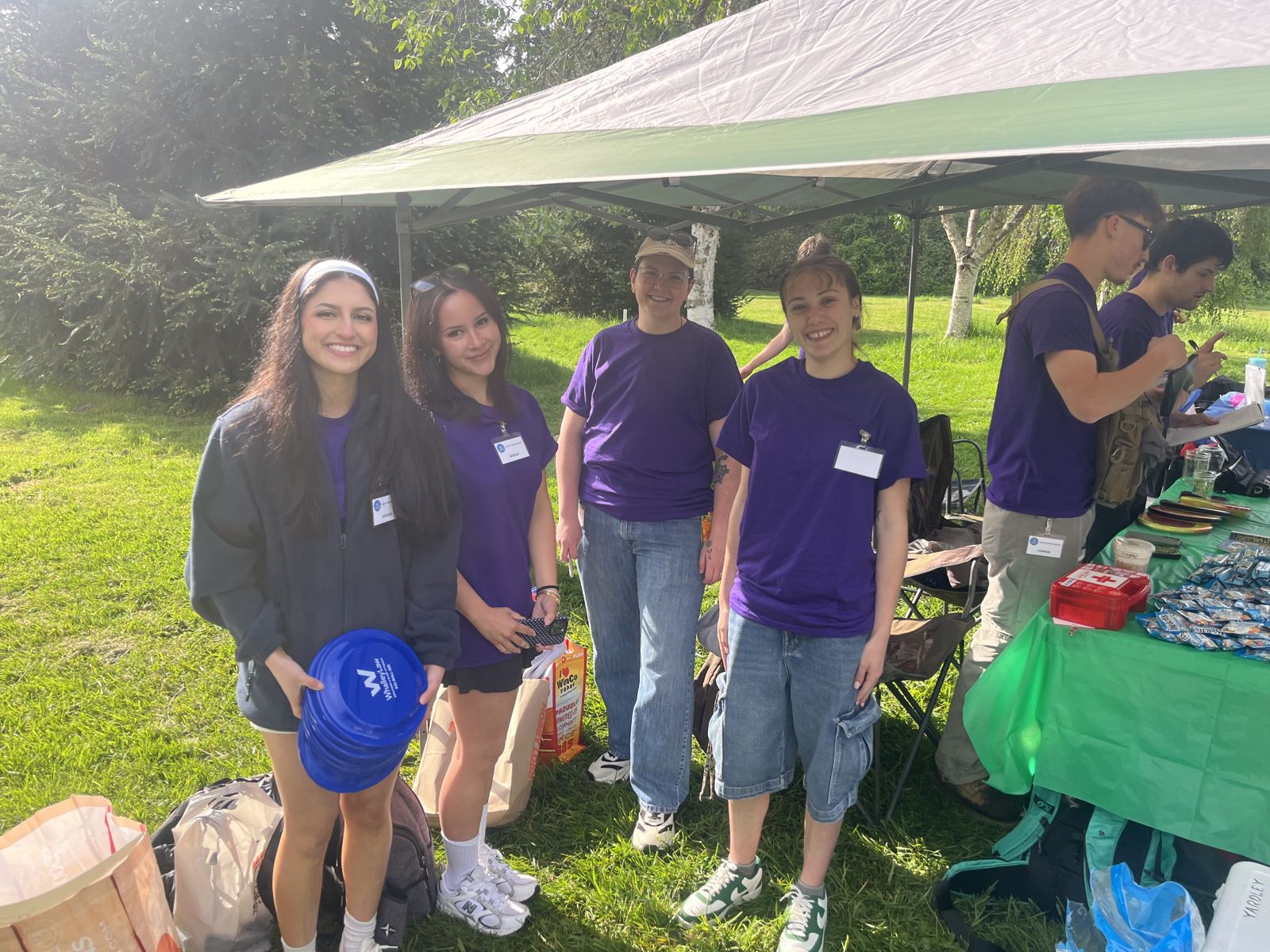
A worldwide teams-of-teams activation on real projects, organized by our changemakers collaborating globally. Its origin is Changemakers Team Academy.
Our changemakers have walked away with awards at every iteration they’ve entered.
Joint showcases, replication playbooks, Coach Academy tracks — and sprint evidence that informs legislators from Washington State outward.
Our teams work in public, generating evidence that informs policy — starting with a Washington Future Generations Act concept aligning education, workforce, and wellbeing across horizons. Sprint results become briefings for decision-makers, with bipartisan feedback invited.
The Changemaker Lab is a proven prototype — and the model is built to travel. Library-anchored, accreditation-flexible, documented in peer-reviewed research, and part of an international network that has replicated it across 14+ countries for three decades. If your university, college, or school system is asking what comes after the lecture hall, everything is on the table: the replication playbook, quality rubrics, Coach Academy, the digital platform, and eight years of longitudinal evidence.
The model also travels digitally. The Changemakers platform carries the full pedagogical arc — learning contracts, skills evidence, team dashboards, sprint tracking, and a live public hub of the issues teams are addressing — which means adopting institutions can run the model online or hybrid, and multiple sites can operate as one connected network with shared quality standards.
Founding institutional partnerships welcome. Early conversations are always confidential.
AshokaU #MillionsOfChangemakers semi-finalist — recognized among the initiatives answering the global challenge to make changemaking the norm, not the exception. Attended the 2024 UN Summit of the Future.
Yes — the model is designed to be adopted. It is library-anchored rather than campus-dependent, accreditation-flexible, and documented in peer-reviewed research. Team Academy institutions run this way in 14+ countries, each as an independent unit inside its own local institution. We share the replication playbook, quality rubrics, Coach Academy training, and our digital learning-evidence platform with institutional partners — and because the platform carries the full pedagogical arc online, the model can also be delivered remotely or hybrid, with multiple sites operating as one connected network. Early conversations are confidential — write to dion@changemakersteamacademy.org.
It was built that way on purpose, not adapted afterward. Explicit structure, honest systems, visible rubrics, a predictable weekly rhythm, and non-neurotypical pathways to mastery are architecture here — not accommodation. Our research explores how presencing and fourth-person knowing resonate with autistic phenomenology: some minds arrive with privileged access to exactly the quality of attention this pedagogy cultivates. Different minds build things differently, and that is a strength of the model.
Through evidence, not seat time. Project artifacts and transparent rubrics across the 21 Changemakers Skills earn micro-badges that aggregate into certificates and articulated degree credit. At The Evergreen State College the program runs in the catalog as Business Fundamentals: Team Entrepreneurship, Leadership and Innovation.
A team-based, learning-by-doing model of higher education born in Jyväskylä, Finland in 1993, now running in 14+ countries including Finland, France, the Netherlands, Hungary, Spain, and the UK. Learners form real team companies, serve real clients, read deeply, and coach each other. Changemakers Team Academy is a sovereign node of this global network in the United States.
Not another prompting course. AI tools change monthly; judgment doesn’t. The best approach to AI education is using AI daily inside real work with real stakes — which is exactly how our team companies run. Changemakers blend AI into research, writing, analysis, design, and strategy for actual clients, and learn the harder skill underneath: knowing what humans need, when human insight and empathy are essential, where AI’s limits are, and how to translate between the two. We call it becoming the human interface to AI — and it can’t be learned from a video series.
When AI can produce competent first drafts of almost anything, employers pay for what it can’t do: judgment, initiative, teamwork, communication, ethical reasoning, systems thinking, and the ability to lead a project from ambiguity to delivery. These are precisely the 21 Changemakers Skills our framework evidences — earned through client sprints, leadership rotations, and public showcases rather than seat time. The industrial-era education system was built to produce compliance; the post-industrial one has to produce capability. Our graduates leave with a portfolio of proof, not just a transcript.
Whether you’re 15 or 70: high-schoolers banking early credit, degree-seekers, veterans turning lived experience into civic and economic projects, athletes building their second arc, people who want to master working with AI, and different thinkers of every kind. Six doors, one front door.
Fund a 90-day library-hub pilot, sponsor cohorts and stipends for access, support the Coach Academy, or bring real project briefs to a team company. Every dollar shows up in public showcases, an annual impact report, and an open data appendix.

Learner, funder, employer, policy partner, or global node — tell us how you’d like to participate and we’ll respond with a short menu of next steps.